






Description
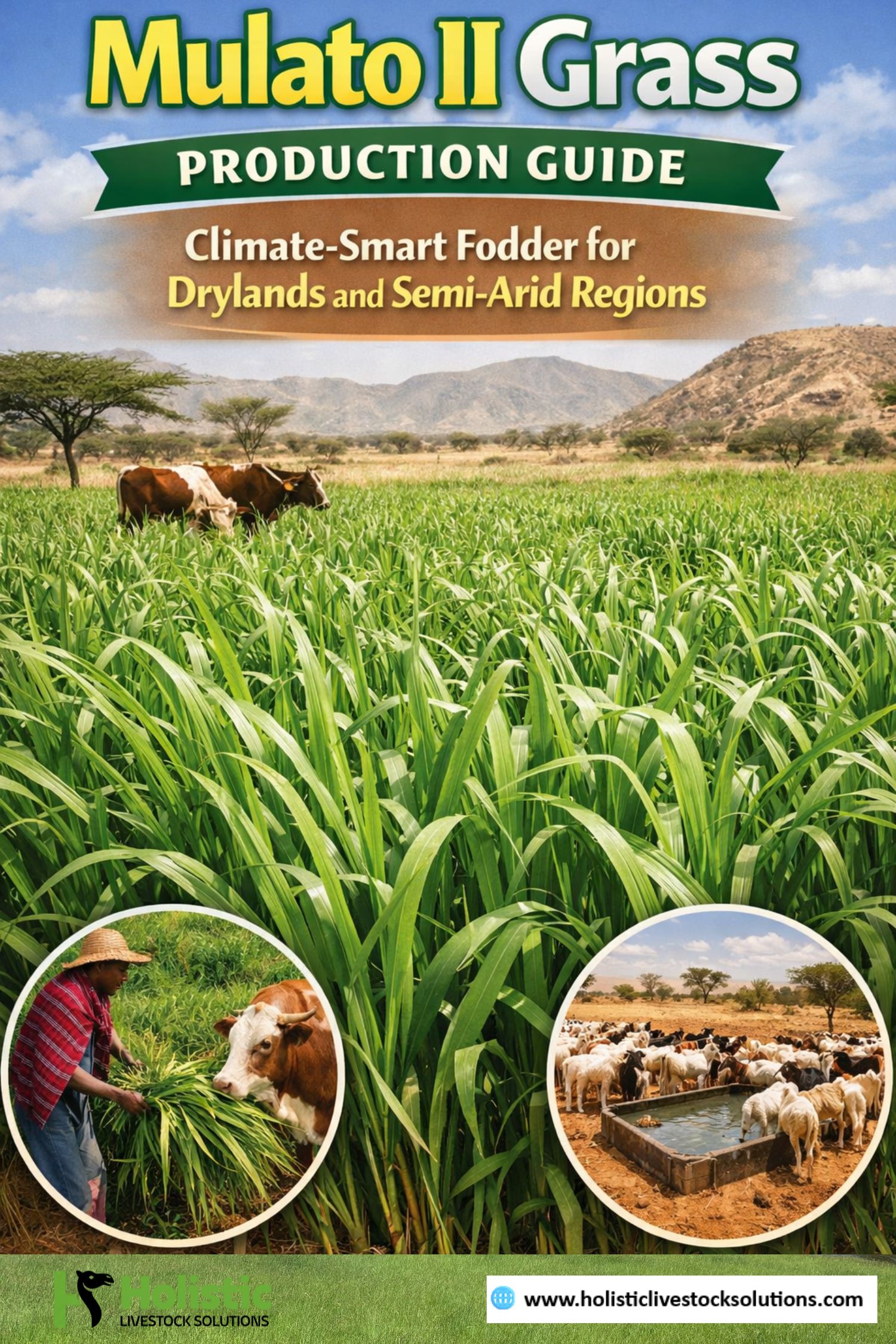
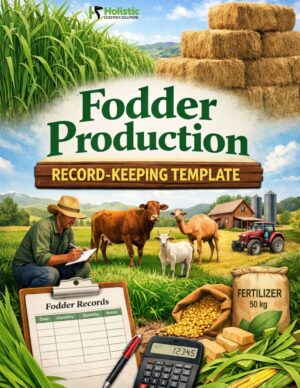
The Mulato II Fodder Production Guide is a comprehensive, step-by-step manual designed for farmers, livestock specialists, researchers and agribusiness entrepreneurs seeking to maximize forage yield and improve livestock nutrition. It provides practical instructions on the entire lifecycle of Mulato II fodder production, from site selection and land preparation to planting, irrigation, fertilization, weed and pest management, and harvesting.
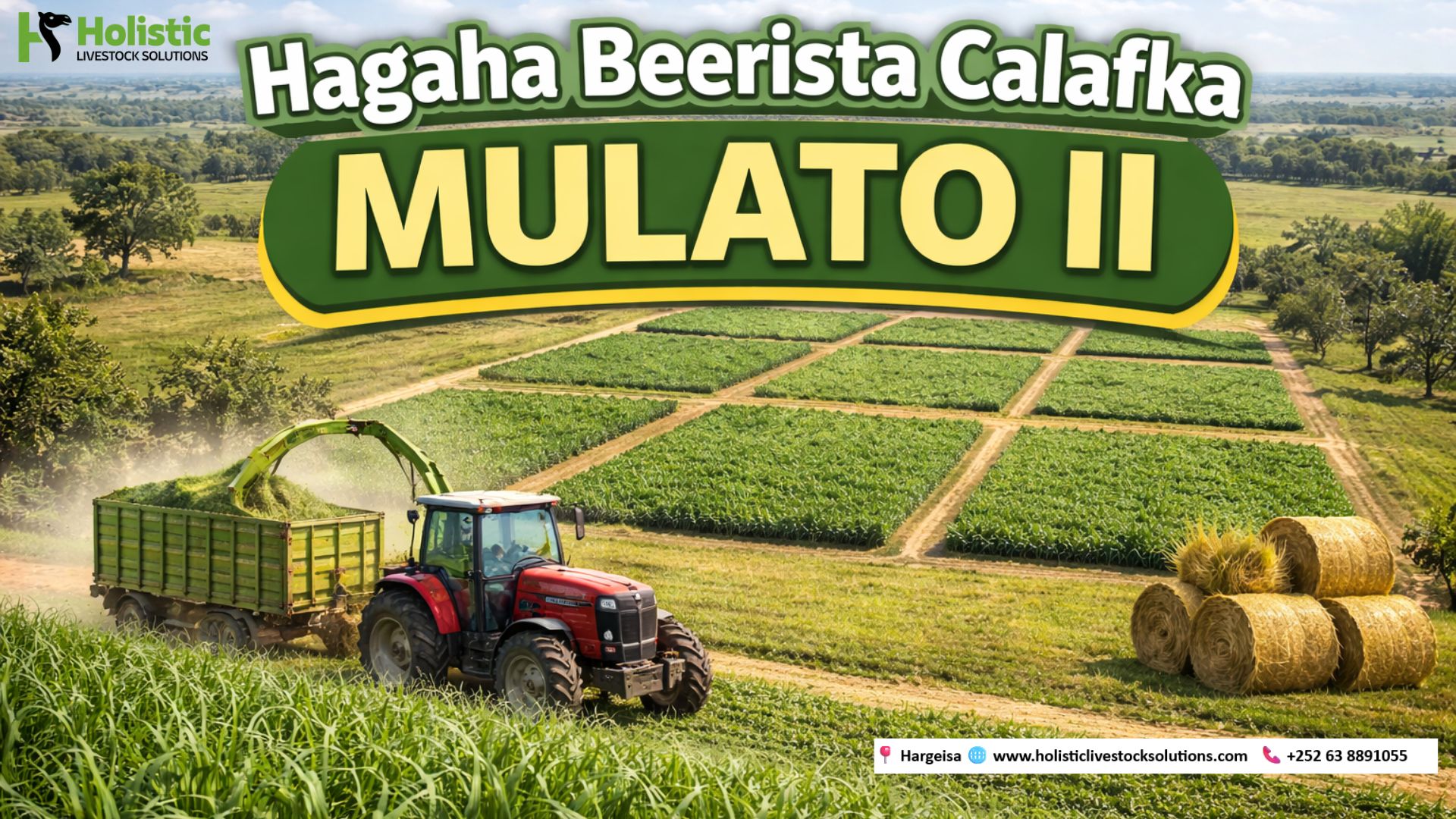
This guide emphasizes best agronomic practices and efficient farm layout planning, including standardized plot design, proper spacing and internal road networks to ensure smooth farm operations and minimize crop loss. It explains how to optimize water use, maintain soil fertility, and apply mechanized and manual techniques for seeding, weed control and harvest, making it suitable for both small-scale and large commercial operations.
Key features include:
- Site Selection: Guidelines for choosing fertile, well-drained land suitable for Mulato II.
- Seed Management: Selection, treatment and planting techniques to ensure optimal germination and establishment.
- Irrigation & Moisture Management: Best practices for rainfed and supplementary irrigation systems.
- Fertilization & Soil Health: Recommendations for organic and inorganic fertilizers to enhance growth and yield.
- Pest & Disease Management: Integrated approaches to control pests and diseases using safe and sustainable methods.
- Weed Control: Mechanical, chemical, and cultural methods for minimizing competition and maximizing fodder quality.
- Harvesting & Post-Harvest Management: Techniques for cutting, drying, baling, and storage to preserve feed quality.
- Farm Layout & Planning: Advice on plot arrangement, access roads, and land use efficiency to support mechanization and operational ease.
This manual is not just a production guide; it is a practical resource for sustainable livestock feeding, helping farmers reduce feed costs, improve fodder quality and maintain continuous forage supply for ruminants. It combines scientific knowledge with practical field-tested techniques, making it an essential reference for anyone involved in forage production or livestock nutrition programs.
Intended Users: Livestock farmers, fodder producers, agronomists, extension officers, research institutions, and agribusiness planners.
Document Type: Technical manual / Practical guide / Instructional handbook
Dr. Abdirahman Saed –
This review evaluates the Mulato II Fodder Production Guide through the triple lens of agronomic performance, economic viability, and regional trade resilience.
Expert Review: Transforming Forage Systems into Economic Assets
Reviewer: Fodder Expert, Animal Health Economist & Livestock Trade Risk Analyst
In the volatile landscape of the Horn of Africa’s livestock sector, feed remains the single largest variable cost and the primary driver of production risk. The Mulato II Fodder Production Guide arrives as a critical intervention, moving beyond basic agriculture to offer a sophisticated framework for “Feed Security as a Business.”
1. The Fodder Expert’s Perspective: Agronomic Precision & Nutritional Density
From a specialized fodder standpoint, Mulato II is a high-performance Brachiaria hybrid known for its superior crude protein content and drought tolerance. This guide successfully bridges the gap between laboratory potential and field reality.
The Standout Feature: The emphasis on standardized plot design and internal road networks. Most manuals ignore the logistics of harvest; this guide treats the farm as a factory. By detailing mechanized seeding and structured harvesting intervals, it ensures a consistent “Nutritional Profile,” maximizing the Digestible Organic Matter (DOM) which is vital for ruminant health.
2. The Animal Health Economist’s Perspective: ROI and Cost-Benefit Analysis
From an economic viewpoint, animal health begins at the trough. Nutritional stress is the leading cause of secondary infections and low reproductive rates.
Input-Output Efficiency: This guide is essentially a financial roadmap. By providing clear protocols for fertilization and irrigation, it allows the producer to calculate the Cost per Kilogram of Dry Matter (DM).
Economic Resilience: For small-scale and commercial players, the “Post-Harvest Management” section—specifically baling and storage—represents a hedge against market price volatility. Reducing feed costs by producing high-quality on-farm fodder can improve profit margins by 30-40% in dairy and meat value chains.
3. The Livestock Trade Risk Analyst’s Perspective: Mitigating Supply Chain Volatility
In the context of livestock trade, particularly for export markets, “Feed Gap” is the greatest risk factor. Drought-induced emaciation leads to trade bans and massive financial losses.
Risk Mitigation: The Pest and Disease Management and Integrated Weed Control sections serve as biosecurity protocols. A farm that follows this manual produces a “Safe and Reliable Commodity.”
Trade Stability: By establishing continuous forage supply, traders and exporters can maintain “Live-Weight Standards” during quarantine and transit, reducing the risk of “distress sales” and ensuring compliance with international Sanitary and Phytosanitary (SPS) measures.
Final Verdict
The Mulato II Fodder Production Guide is more than a manual; it is a strategic asset. It is an essential resource for any stakeholder looking to transition from traditional, vulnerable grazing systems to a modernized, resilient, and profitable livestock enterprise.
Recommendation: Highly recommended for Agribusiness planners, Extension officers, and Commercial Livestock Investors.
Key Indicators Addressed:
Production: Site selection, Seed management, Irrigation.
Profitability: Farm layout efficiency, Post-harvest value retention.
Stability: Pest resilience, year-round fodder