
By Dr. Farhan Ahmed Yusuf | Senior Livestock Consultant| Holistic Livestock Solutions
13th November,2025
Livestock production plays multiple roles across Somaliland and the Horn of Africa. Livestock is a source of food (meat, milk, hides), livelihood (employment, trade, exports), culture (pastoral traditions) and ecosystem services (grazing, nutrient cycling). Production systems in this context range from extensive pastoralism, semi-intensive smallholder systems, to emerging commercial specialised units.
Yet many production systems stop short of what we call finishing. In traditional extensive or semi-intensive systems animals grow, but may not be optimised before sale or slaughter. This leaves value on the table: lower weight, poorer feed-conversion, less desirable carcass or product quality and reduced export or market opportunities.
In beef cattle for example, the “finishing” phase is when animals move from growth to fat / muscle deposition at commercial slaughter weight. According to the daily experience, the finishing period will typically begin when cattle reach around a reasonable weight like 300 to 330 kg live weight and a seamless weigh gain starts as they are fed and well-conditioned. At this point protein demands start to remain medium and energy density of the ration can be increased to promote fat deposition.
Recent scientific reviews from Brazil (Agethen K. et al., 2024) highlight consistent trends in livestock finishing: beef cattle are commonly finished under three dominant systems—confinement, semi-confinement and pasture-based feeding, each offering distinct performance and economic outcomes depending on feed resources and management intensity
So, the stage is set: if livestock producers can modernise the finishing phase, they stand to unlock higher productivity, better quality product and stronger market value. Livestock finishing represents a complete value chain segment with significant economic potential.
It links feed production, animal management, processing, marketing and trade into a unified system that transforms raw livestock resources into premium, market-ready products.
When managed efficiently, this stage generates income not only for agribusiness owners, farmers but also for feed suppliers, transporters, abattoirs, traders, and exporters, creating jobs and driving rural economic growth.
However, in most local markets across Somaliland and the Horn of Africa, the finishing opportunity remains underutilized. Animals are often sold at low weight grades and suboptimal body condition, simply, farmers want quick cash or lack feed resources and there are no structured livestock finishing facilities.
This practice reduces the price potential per animal—buyers pay for liveweight and visible condition. If these animals were retained for an additional 45–60 days under a structured finishing system, using improved feed and management, they would not only reach export-standard grades but also yield higher carcass quality and premium prices.
Global Meat Demand Trends: The global livestock and meat market size was estimated at USD 1.37 Trillion in 2024 and is predicted to increase from USD 1.39 Trillion in 2025 to approximately USD 1.60 Trillion by 2034, expanding at a Compound Annual Growth Rate (CAGR) of 1.58% from 2025 to 2034. The growth of the livestock and meat market is driven by increasing consumption of processed and frozen meat and the rapid expansion of the food & beverage industry(Global livestock & meat market growth by Precedence Research paper on March,2025).
What is Finishing (in Livestock Production)?
Finishing is the final phase in the production cycle when an animal is driven to its market or slaughter weight with optimum body condition, carcass quality (in meat animals), or product readiness (for milk, hides, etc.). Some key features:
It usually follows primary growth (frame size, skeletal growth) and precedes sale/slaughter. For cattle this might involve intensification of feed, closer management, targeted nutrition and health control and prepared to reach optimal body condition score (BCS). The goal is maximum economic return per animal, not simply growth, but high weight gain, good feed conversion, correct finish (fat cover, Enough muscle mass, Balanced fat cover, condition) and market trait.
It requires deliberate management: nutrition (feed composition, energy/ protein ratio), health (parasite control, disease management), environment (housing or paddocks, water, comfort), and timing (age or weight at entry and exit). In short: modern finishing is not just “let animals grow longer, but manage them intensively for quality, yield and profit.
Why Adopt a Modernised Finishing System?
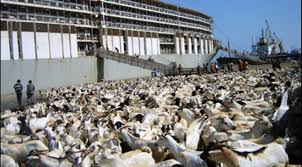
Interestingly, what many local farmers overlook is being done elsewhere: When animals are exported through Berbera, reach end market, they are sometimes finished before resale, fed intensively, conditioned and then sold again at a higher grade and premium price. This means others are reaping profits that could easily stay within Somaliland if local finishing systems were scaled up. The lesson is clear: finishing isn’t a cost—it’s a missed revenue opportunity.
Better carcass/product quality and market value Research shows finishing systems (grain-based, pasture‐based with targeted nutrition) improve carcass grades and desirable quality traits. One study found animals in a finishing system yielded 93 % Choice carcass grade (45 % Premium Choice) in a grain finishing system. (Smith, J. A. (2023). Evaluation of feedlot conditioning practices in small ruminants. Mississippi State University.
- Faster turnaround and higher turnover-Modern finishing shortens the time to market by achieving target weight/condition quicker, meaning you can rotate capital, increase Turnover of animals and scale your operation. This accelerated growth allows enterprises to rotate capital faster, increase the Stock flow rate of animals and ultimately scale operations with greater economic efficiency.
- Better alignment with market and regulatory demands Export markets, meat traders and even local high‐value markets increasingly demand uniformity, traceability, quality and consistency. A finishing system allows you to deliver that. Also, given your interest in policy, SPS (sanitary, phytosanitary) compliance and institutional frameworks, a finishing system positions you to comply with quarantines, export corridors (e.g., via Berbera Port), and enhance value.
- Better resource use and profitability-With proper nutrition and management, finishing systems may yield higher profit per animal. For example, the beef finishing systems guidance notes that taking cattle to finish can be one of the most expensive periods. with feed conversion efficiency reducing as cattle gain. That means you must manage closely to avoid diminishing returns – but if done right, the upside is strong.For instance, if a group of youth engage in cost-sharing to purchase 10–20 bulls, keep them in a strategic holding pen, and provide basic feed, care, and rest, even without intensive finishing, the enterprise can generate meaningful financial returns. By selling the animals after a short management period and reinvesting the proceeds, they can rotate the capital to generate continuous turnover and sustain regular income cycles.
- Competitive advantage in a changing livestock sector-obviously, the Horn of Africa livestock sector is evolving with trade corridors, technology adoption (digital traceability, better feeds, innovative machinery) and rising global demand for meat. Modern finishing arms you to compete.
Building a Productive Finishing System
Somaliland and the wider Horn of Africa are grappling with one of the highest youth unemployment rates in in the World (37.4 %,) even as promising agribusiness opportunities remain underexploited. Livestock finishing represents a practical, investment-ready sector with measurable returns, short pay-back periods and high local impact. Yet, commercial banks and micro-finance institutions have been slow to recognize livestock finishing as a bankable venture, often overlooking its cash-flow potential, asset-backed security and regional market demand. If financial institutions designed targeted credit lines or guarantee schemes for youth agripreneurs, they could unlock thousands of jobs, retain export value locally and stimulate inclusive rural growth.
Who should adopt modernised finishing?
- Commercial livestock producers and agribusinesses (like your projects: feed processing, pellet machine capacity, fodder research block) who are ready to move beyond extensive grazing.
- Mixed‐farm operators who already raise animals but want higher value.
- Feedlot or semi‐feedlot operations (confinement or intensive paddocks) aiming for export or premium local markets.
When is the finishing phase implemented?
- For ruminants (cattle, goats, sheep, camels): Once animals have achieved structural growth (frame, skeletal size) and are entering the final weight-gain phase. For cattle in one guidance: at ~450 kg liveweight the finishing phase begins.
- The duration depends on species, breed, initial weight, target market weight/condition, feed base, management.
- In your context, you may set finishing entry at a defined weight/age and exit at target market condition (e.g., for export markets or domestic premium cuts).
- Timing is also influenced by feed resource availability, seasonality (fodder blocks, forage supply), housing, health plan etc.
How to build a modernised finishing system – step by step
Here’s a structured roadmap you can adopt, with tailored content:
A key strategy for realising this advantage is the effective utilisation of locally available feed resources, including crop residues, agro-industrial by-products, fodder crops and native forage species. These inputs are not only more affordable, but also safer, accessible and environmentally sustainable, providing a reliable nutritional base for intensive and semi-intensive finishing systems. Leveraging local feed resources reduces production costs, strengthens regional feed security and ensures continuity of finishing operations throughout the year. This is more underpinned by a strategic feed reserve.
The courage to adopt modern practices is the spark that drives innovation, establishes long-lasting good practices and lifts agribusiness actors out of economic stagnation into a pathway of growth and competitiveness.
For example, lean cattle exported from Somaliland and the wider Horn of Africa are often finished and conditioned outside the region. After undergoing value addition, improved carcass weight, fat cover and grading, their meat is re-exported with a certificate of origin from the third-country finishing rather than the original source. The final product is then sold at a premium price, leaving the primary producers at a disadvantage and limiting the economic benefits that should accrue to the region of origin. A cow purchased for approximately USD 450 in Wajaale livestock market can be resold for nearly USD 800 in the final destination market after undergoing finishing, conditioning and proper marketing. This price transformation reflects the significant value addition that occurs outside the region—benefits that could be retained locally if structured finishing systems and modern production practices were adopted within the region.
- Definition of target market & finish specification
- Determine the market: local high-end, regional export, niche (organic/pasture‐finished), halal export, etc.
- Set specifications: live weight, carcass weight, fat cover, muscle conformation, grade, age, breed.
- Align to local/regional regulatory/quality requirements (export protocols, SPS, traceability, certification).
- Animal selection & entry criteria
- Choose animals with good growth potential (breed, frame, health history).
- Entry into finishing when animal reaches structural growth, good body condition and minimal residual growth; then allocate to finishing unit.
- Health check: deworming, vaccination, parasite control, foot/trimming, baseline weight.
- Design of finishing unit / housing or paddock
- A dedicated facility or paddocks for finishing with good feed delivery, water, comfortable bedding or resting area, good ventilation (for confinement).
- Sufficient space to minimise stress, reduce disease risk, ensure uniform access to feed.
- Infrastructure: feed bunks/tanks, waterers, manure management, biosecurity, animal handling facilities (chutes, draft pens).
- Nutrition & feeding strategy
- Transition from growth ration to finishing ration: higher energy density (so more concentrate/ grain or high-quality forage + supplement) to promote muscle + fat deposition. For beef cattle: once protein demand drops and energy requirement rises.
- Monitor feed conversion: feed intake, average daily gain (ADG), feed:gain ratio.
- Provide consistent, sufficient feed, water, minerals, and manage rumen health (especially if using high concentrate rations).
- Health, welfare & management monitoring
- Frequent weight/daily gain monitoring, body condition scoring, visual health checks.
- Prevent disease, parasites, stress. A heavier animal on finishing tends to have higher risk (see heavier finishing cattle risk article).
- Ensure good welfare: adequate rest, low stress handling, clean water, comfortable environment. Higher welfare often yields better results and may fetch premiums.
- Data, records & decision support
- Record animal entry weight/age, ration composition, feed intake, daily/weekly gains, health events, targeted exit weight.
- Use this data to optimise finishing duration, cost per kg gain, feed conversion, profit per animal.
- This aligns with your technology interest (digital traceability, AI feeding calculators) and helps you provide training modules.
- Exit strategy & marketing
- Exit when target specification is reached: weight, condition, carcass grade. Delaying may incur diminishing returns or increased risk. For example: heavier weights may increase risk of health issues or lower feed conversion.
- Align marketing: ensure slaughter/market timing, transport, certification, sale price. Use finishing as value-adding step.
- Consider segmentation: e.g., premium cuts, export, domestic niche – finishing system helps produce uniform animals for these channels.
- Economic assessment & profitability modelling
- Calculate cost of finishing: feed cost, labour, housing, health, mortality/ risk.
- Compare incremental revenue (higher sale price per animal) minus finishing cost to compute profitability per animal.
- Continuous improvement
- Review performance: which animals, rations, durations delivered best results? were there losses or inefficiencies?
- Adopt innovations: feed mixing, precision feeding, sensors for feed intake, smart health monitoring, better fodder varieties.
Key Take-Away: Modern Finishing is a Must for Value Leadership
In today’s livestock market – especially with rising global demand, tightening quality/traceability standards and increased competition – merely raising animals is no longer sufficient. The finishing phase is where you capture value. Whether you are working with cattle, goats, sheep or camels, adopting a structured, modernised finishing system will help you:
HLS is ready to provide the technical support your agribusiness needs to flourish and achieve a sustainable growth.