
By Dr. Farhan Ahmed Yusuf | Senior Livestock consultant| Holistic Livestock Solutions
08 November 2025
The Horn of Africa is home to a large pastoralist population estimated at 50 million for the 8 countries in the Horn. Pastoralists and agro-pastoralists are amongst the major population groups. They rely on livestock for their livelihoods, which is the dominant economic activity in the drylands.
However, the most critical limiting factor affecting livestock production and resilience in the region is the shortage of healthy rangeland resources and inadequate fodder reserves. During prolonged dry seasons and recurrent droughts, natural pasture cannot regenerate fast enough to sustain herds. This leads to severe feed gaps, livestock body weight loss, weak immune status, increased disease vulnerability, reduced conception rates, higher mortality and depressed market value.
Strengthening fodder production systems, establishing fodder reserves and rehabilitating degraded rangelands are therefore strategic entry points for improving pastoral resilience, stabilizing livestock-based economies and reducing drought-related losses across the Horn of Africa.
Invasive plant species are now one of the most silent and destructive threats to sustainable agribusiness and livestock-based production systems across Somaliland and the wider Horn of Africa. They aggressively occupy fertile farmland, rangeland grazing blocks and irrigation zones, competing with productive fodder crops for water, nutrients, sunlight and space. Their spread has accelerated due to unmanaged grazing, uncontrolled seed movement, poor biosecurity practices and absence of early preventive intervention. Holistic Livestock Solutions (HLS) identifies invasive plant control as a core strategic pillar for protecting land capital, safeguarding fodder production potential and securing long-term livestock profitability.
What Are Invasive Plant Species?
Invasive plants are non-native alien plant species introduced into an ecosystem (intentionally or unintentionally) where they did not originally belong. Once introduced, they rapidly establish, spread aggressively and dominate new areas, out-competing native vegetation and productive forage species. Unlike normal weeds, invasive plants change the structure, composition and productivity of farmland and rangeland ecosystems.
These species have biological characters including:
- high seed output and long seed viability
- deeper rooting systems than grasses
- high tolerance to drought and harsh climates
- capacity to regrow vigorously after partial removal
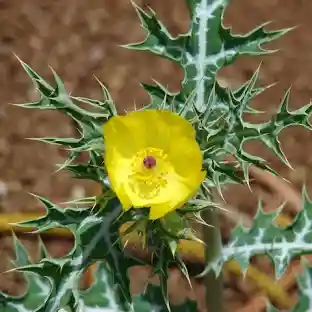
- Develop dangerous and sharp thorns that injure livestock, damage hides, tear skin,
- unpalatable or toxic nature that livestock avoid
In Somaliland and the Horn of Africa, many invasive species entered through imported feed aid, seed trade, cross-border livestock movements and ornamental plant introduction. Once established, they become ecological dictators, occupying productive farm space, reducing grazing potential and causing severe long-term land degradation. Woody invasive types such as Prosopis juliflora form dense, thorny thickets that are extremely costly and labor-intensive to clear.
Negative Consequences & Damages
These invasive species:
- reduce available forage biomass
- destroy native grass species and fodder diversity
- prevent livestock from accessing grazing areas
- contaminate feed and harvested hay material
- injure livestock due to thorns, burrs and toxic latex
- degrade soil health and block regeneration of pasture
Parthenium, when consumed, even causes bitter milk, making dairy produce undesirable and rejected by consumers, a direct income penalty for dairy farmers.
How These invasive plants Spread
Invasive plant species have highly efficient natural dispersal mechanisms, which makes their control extremely challenging once they enter a farming ecosystem. Their seeds are often small, light, attached with hooks or burrs, or designed to survive harsh biological conditions. This allows them to easily travel far beyond the initial infestation area. These invasive plants commonly establish and spread aggressively along livestock movement routes, around watering points, on riverbanks, along seasonal water flows, near balleys (water harvesting pits), in kraal surroundings and around traditional livestock night pens. These locations provide ideal conditions for seed deposition through animal dung, soil disturbance and continuous hoof pressure, creating perfect germination zones and rapid colonization centres.
Major pathways of spread include:
- Animal dung: Seeds pass through the digestive system of livestock without being destroyed. As animals graze and move between grazing blocks, they defecate the seeds onto new land, creating new infestation points.
- Flood runoff and irrigation channels: During rainy seasons and floodwater flow events, seeds get washed downstream to farms, valleys, fodder fields, catchments, riverbeds, or irrigated zones, accelerating spread across landscapes.
- Wind dispersal: Some species produce extremely small or feather-like seeds that can travel long distances with wind, making containment very difficult especially in open rangeland systems.
- Contaminated hay, fodder bales and crop residues: When feed is transported from infested areas, seeds embedded inside hay, baled crop residues, or commercial traded fodder can introduce invasive species directly into the receiving farm.
- Movement of soil from infested land: This includes borrowing soil for construction, pond building, bund construction, roads, or contouring. If soil is taken from infested range or farmland, seeds get introduced into clean areas instantly.
Together, these pathways show that invasive plant spread is often accidental and farmer-assisted without realizing it. This means biosecurity vigilance at farm entry, seed sourcing, feed sourcing and soil movement is absolutely critical.
Even a tiny early patch, if ignored, can expand aggressively and turn into a widespread invasion within a single growing season, costing the farmer years of recovery and extensive financial resources to reverse.
Distribution of Invasive Plant Species in the Horn of Africa
Across the Horn of Africa (HoA), invasive plant species have now become widespread in rangelands, valley bottoms, peri-urban grazing fields, irrigated farmlands, dry riverbeds, livestock watering points, abandoned farms and road corridors. Their distribution pattern is strongly linked with livestock movement routes, flood plains, cross-border trade pathways and humanitarian feed assistance supply chains.
- Prosopis juliflora is now heavily dominant in coastal zones, dry wadis, flood plains and pastoral corridors in Somaliland, Ethiopia, Kenya and Djibouti, especially areas with seasonal run-off and abandoned grazing land.
- Parthenium hysterophorus is widespread in Ethiopia, Kenya and emerging in Somaliland roadsides, fodder storage sites, market yards and crop production belts.
- Opuntia spp. (Prickly pear) has spread strongly in Somaliland, Kenya, South Ethiopia and various semi-arid communal grazing lands where livestock movement has supported seed distribution.
- Lantana camara dominates disturbed soils, overgrazed rangelands and roadside buffer strips in Kenya, Uganda, Ethiopia highland transition zones.
- Xanthium, Argemone, Datura and Euphorbia species are widely scattered across both agricultural and rangeland mosaics where human disturbance, soil exposure and weak grazing management is common.
This expansion has been accelerated by climate variability, erratic rainfall patterns, land use conversion, weak rangeland governance and absence of early warning weed surveillance systems. Without coordinated regional action and farm-level biosecurity, invasive plant species will continue marching across new territory in the Horn of Africa, displacing native grasses and undermining livestock economies.
Economic Loss Impact
The economic losses are silent but severe:
| Area of Loss | Effect |
| Reduced fodder production | Higher cost to purchase external feed |
| Lower livestock performance | Reduced weight gain, lower milk yields |
| Land clearing & restoration costs | Clearing Prosopis can cost 5–10× more if delayed |
| Declining product quality | Bitter milk, burr contamination in wool & hides |
| Reduced return on agribusiness investment | Lower productivity per hectare = lower profit |
Invasive species are therefore not just a plant problem; they are a revenue loss problem.
Control Strategies for Farmers & Agribusiness Operators
| Strategy Type | Action Required |
| Early Detection | Regular scouting and immediate removal of seedlings |
| Mechanical Control | Uprooting, chopping before flowering, repeated slashing |
| Pasture Competition | Establish strong fodder species (Buffel, Mombasa, Desmodium) |
| Responsible Chemical Use | Spot treatments only , avoid harming beneficial forage |
| Controlled Utilization | Prosopis pod milling at safe levels to reduce spread |
Never allow invasive plants to occupy farmland — prevention is cheaper than restoration.
Seed Purity & Farm Biosecurity Measures
Many farms unknowingly introduce invasive species through contaminated seed material.
HLS strongly advises:
- Purchase farm seed only from certified, reputable seed suppliers
- Conduct visual seed inspection before sowing
- Avoid buying seeds from informal or unknown traders
- Demand proof of purity, certification and origin
- Treat seed sourcing as a KEY biosecurity checkpoint-clean seed today prevents land loss tomorrow.
HLS Scientific Note-The fight against invasive plant species is a fight to protect national rangelands, fodder production capacity, livestock productivity and future agribusiness competitiveness in the Horn of Africa. Advanced farms invest in prevention — not emergency clearance.
Healthy land → healthy feed → healthy livestock → profitable agribusiness.
HLS will continue providing guidance, advisory tools and capacity building to empower farmers and agripreneurs to protect their land and unlock more economic value from every hectare.